Next-gen LMS Exploration
Paideia LMS — a modern Moodle and Canvas alternative, packaged as a single binary.
Goal
Build a next-generation Learning Management System focused on simplicity — a credible Moodle and Canvas alternative packaged as a single executable, with a modern tech stack, no plugin sprawl, and AI-native features built in rather than bolted on.
Problem
From years operating Moodle at Trinity Western University I knew the pattern: most third-party plugins are unmaintained, routine tasks are difficult, and extending the platform introduces real security and technical-debt risk. Institutions need an LMS that is feature-complete out of the box, easy to deploy, and honest about its dependencies — not a monolith glued together by plugin authors who long ago moved on.
Solution
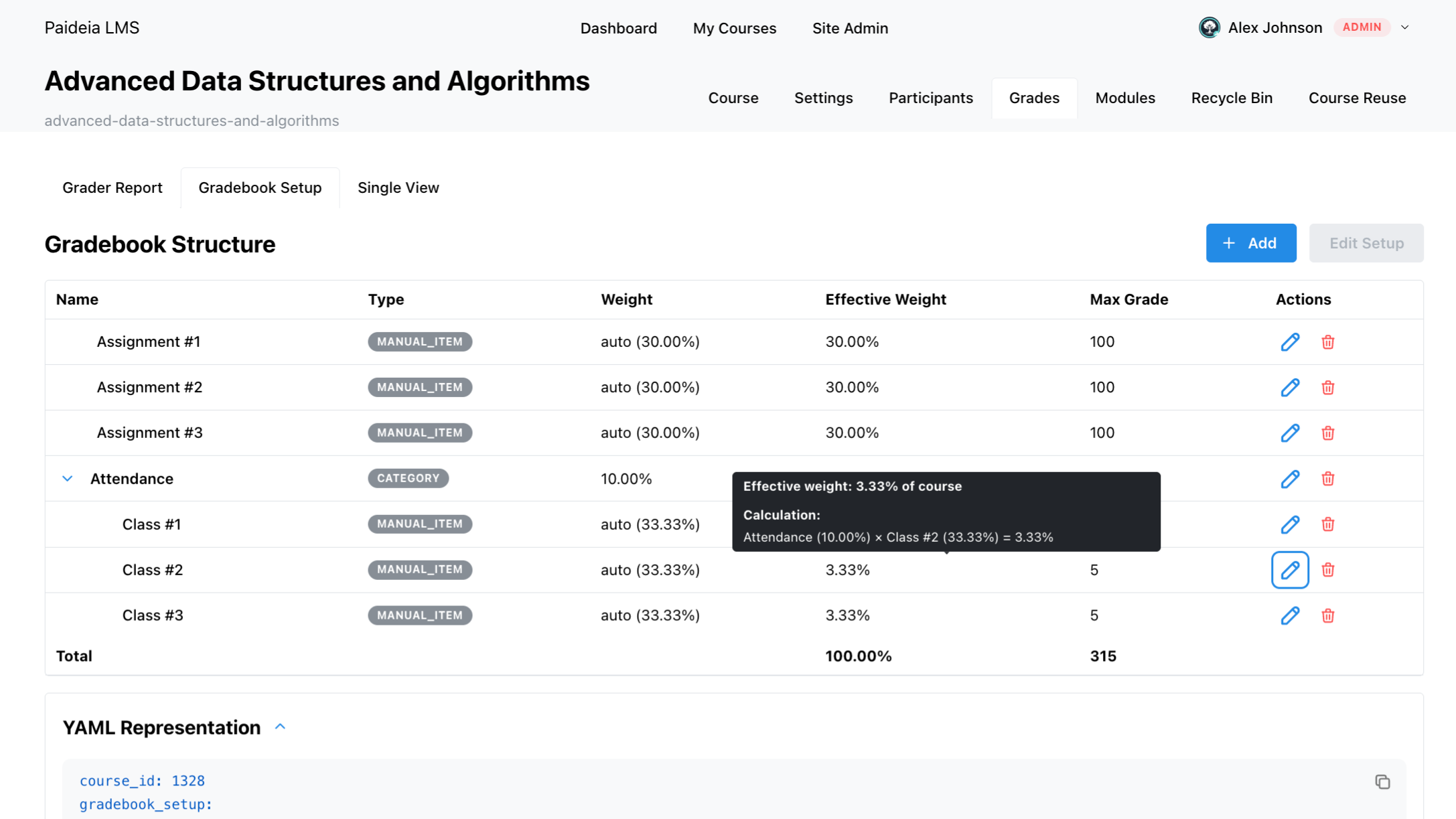
Paideia LMS is built with Bun, React Router v7, Elysia, and TypeScript, on PostgreSQL and S3. It ships as a single binary — download and run, or pull the official Docker image — with courses, enrolments, assignments, quizzes, discussions, gradebooks, LTI, payments, RESTful API, and migration importers from Moodle and Canvas all built in. No dynamic plugin architecture. Free and non-profit forever; the project welcomes sponsors and donations.
See Why Paideia?, browse the product gallery for screenshots and walkthroughs, and try the live demo.
Achievement
- Working single-binary LMS covering course management, role-based access, gradebook, payments, LTI, REST API, and import from Moodle / Canvas — in five months of focused build.
- Public infrastructure shipped — live demo, full documentation site, and an open GitHub repository.
- Founder & project lead — defined the architecture (single binary, no plugins, PostgreSQL + S3) and the design principles that distinguish Paideia from Moodle and Canvas.
Repository
★ 46 stars 5 forks

Features
- Course management — assignments, quizzes, content, grading.
- User management with role-based access control.
- Payment integration.
- Version control and change tracking.
- RESTful API.
- Importers from Moodle, Canvas, and other LMS platforms.
- Built-in LTI (Learning Tools Interoperability) support.
- AI-native features built directly into the platform.
- Microsoft integration — Teams, OneDrive, Office 365 — no plugins required.
Architecture
- Single executable deployment — download and run.
- Docker-deployable — hananoshikayomaru/paideia on Docker Hub for one-command server installs.
- Lightweight and fast; designed for server (not serverless) deployments.
- No dynamic plugins — everything essential is built-in, maintainable, and secure.
- PostgreSQL and S3 for storage — minimal footprint, massive scalability.
- Built with Bun, React Router v7, Elysia, and TypeScript.
More: paideialms.com · Why Paideia? · Gallery · Live demo · Docs · Docker Hub · GitHub